
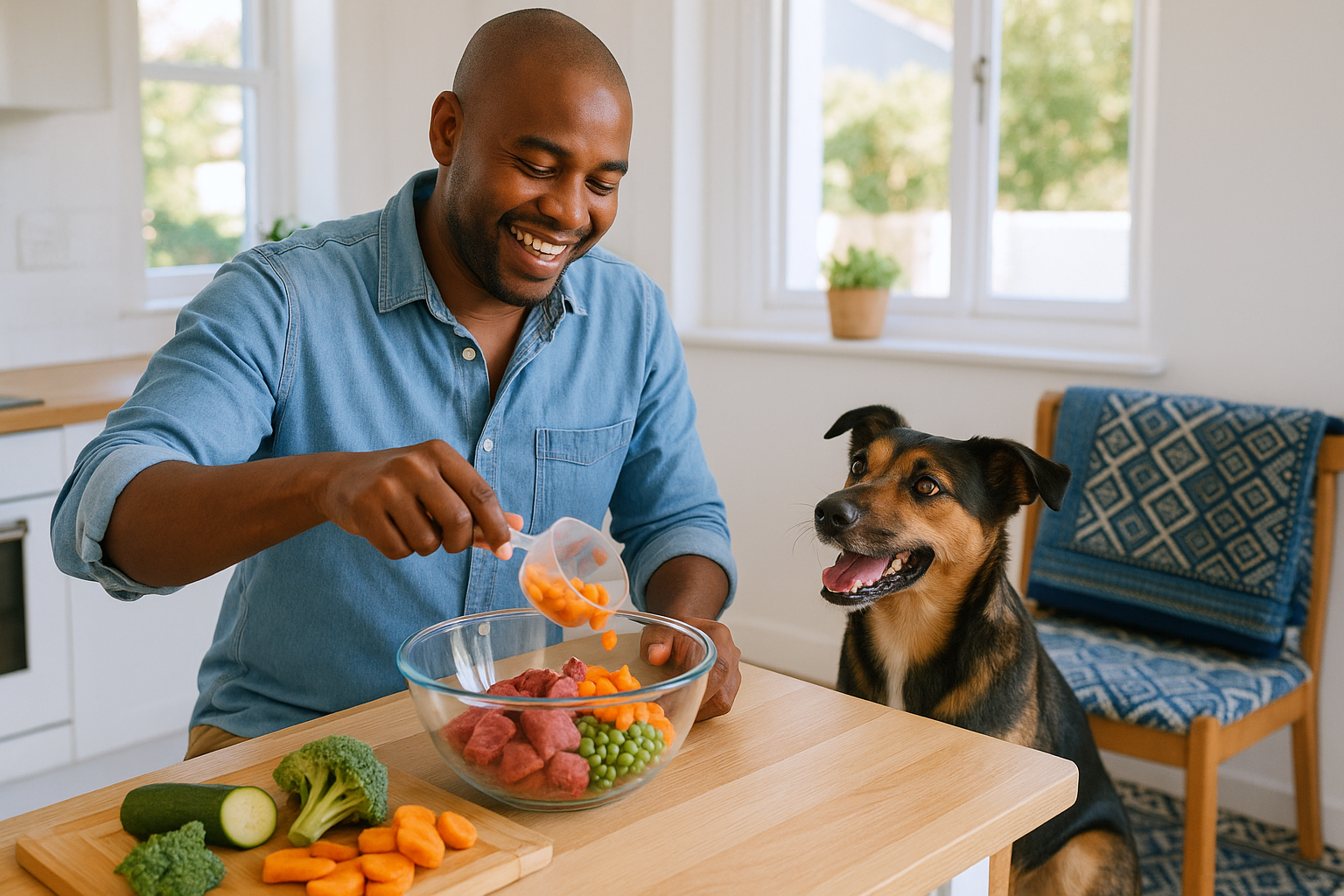
Raw feeding — commonly referred to as a BARF (Biologically Appropriate Raw Food) diet — is based on the principle that dogs thrive on a diet that closely resembles what their wild ancestors ate. Proponents point to shinier coats, healthier teeth, firmer stools, and improved energy levels as benefits. While raw feeding can be enormously beneficial when done correctly, it requires genuine commitment to nutritional balance and food safety.
A balanced raw diet typically consists of approximately 70% raw meat (including organ meat), 10% raw meaty bones, 10% vegetables and fruit, and 10% offal such as liver and kidney. Getting this balance right is critical. A diet of muscle meat alone, without the inclusion of bone and organ meat, will quickly lead to serious nutritional deficiencies. If you are new to raw feeding, consider starting with a commercially prepared raw product from a reputable South African supplier — these are formulated to be nutritionally complete and take the guesswork out of balancing the diet yourself.
Food safety is a genuine concern with raw feeding. Raw meat carries bacteria such as Salmonella and E. coli that pose risks not only to your dog but also to members of your household, particularly children, the elderly, and immunocompromised individuals. Always handle raw food with the same care you would use in preparing food for human consumption — wash hands, surfaces, and bowls thoroughly after each meal. Store raw food frozen and thaw it in the refrigerator rather than at room temperature.
Transitioning from kibble to raw should be done gradually over seven to ten days to minimise digestive upset. Start by replacing a small portion of your dog's current food with raw and gradually increase the proportion. Some dogs transition with ease; others experience loose stools during the adjustment period. If digestive issues persist for more than two weeks, consult your veterinarian. It is also worth having a vet experienced in raw feeding review your dog's diet after the first month to ensure nutritional adequacy.
Raw bones are an important component of the BARF diet, providing calcium, phosphorus, and the dental benefits of chewing. Always feed raw, never cooked bones — cooked bones become brittle and can splinter dangerously. Suitable raw bones for dogs include chicken frames, lamb ribs, and beef marrow bones. Always supervise your dog when feeding bones and select a bone size appropriate for your dog to reduce the risk of choking or tooth fractures.







Write Your Opinion!
Log in or Sign up to leave a comment.