
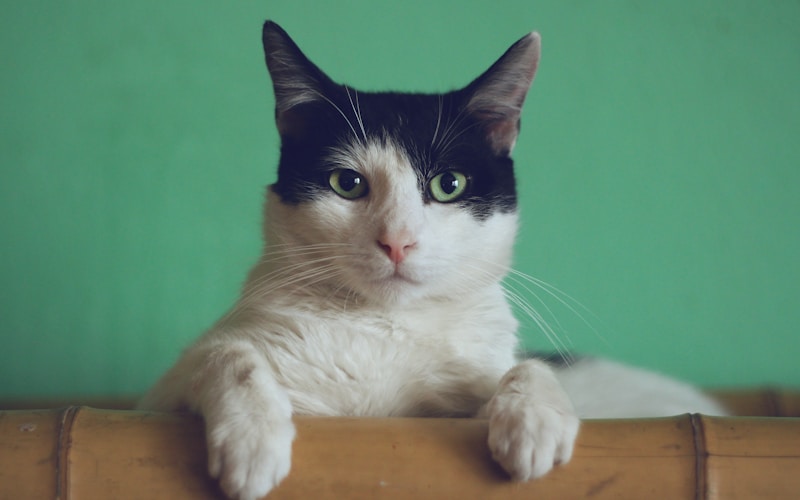
Despite their reputation for being mysterious, cats are actually remarkably expressive — once you know what to look for. Their entire body is a communication tool, from the tip of their tail to the position of their whiskers. Understanding these signals allows you to respond appropriately to your cat's needs and build a relationship based on mutual trust rather than guesswork.
The tail is perhaps the most expressive part of a cat's anatomy. A tail held high while your cat walks towards you is a confident, friendly greeting — the feline equivalent of a warm hello. A tail fluffed up to twice its normal size signals fear or aggression, while a low tail tucked between the legs indicates anxiety or submission. A slowly swishing tail often means your cat is focused or mildly irritated, and if it begins to lash rapidly, it is time to back away and give them space.
Eye contact and slow blinking carry deep significance in cat communication. Direct, prolonged staring is a challenge or threat in cat language, which is why cats often gravitate toward guests who ignore them — those people are not making "threatening" eye contact. If your cat makes eye contact and then slowly blinks at you, they are expressing trust and affection. You can return the gesture with a slow blink of your own; many cats will respond by blinking back, reinforcing the bond between you.
Ear position communicates mood with impressive precision. Forward-facing ears indicate curiosity or contentment, while ears rotated sideways (sometimes called "airplane ears") signal irritation or overstimulation — a common sight during a petting session that has gone on slightly too long. Ears flattened fully back against the skull are a clear warning sign of fear or imminent aggression. If you see this, stop what you are doing and give your cat space immediately.
Vocalisation combined with body language tells the full story. A chirping sound paired with a twitching tail usually means your cat has spotted prey — often a bird through the window. A slow, drawn-out meow accompanied by a relaxed posture is a friendly request for attention or food. Learning to combine all of these cues will transform your understanding of your cat and make you a far more attuned, responsive companion.









Write Your Opinion!
Log in or Sign up to leave a comment.