
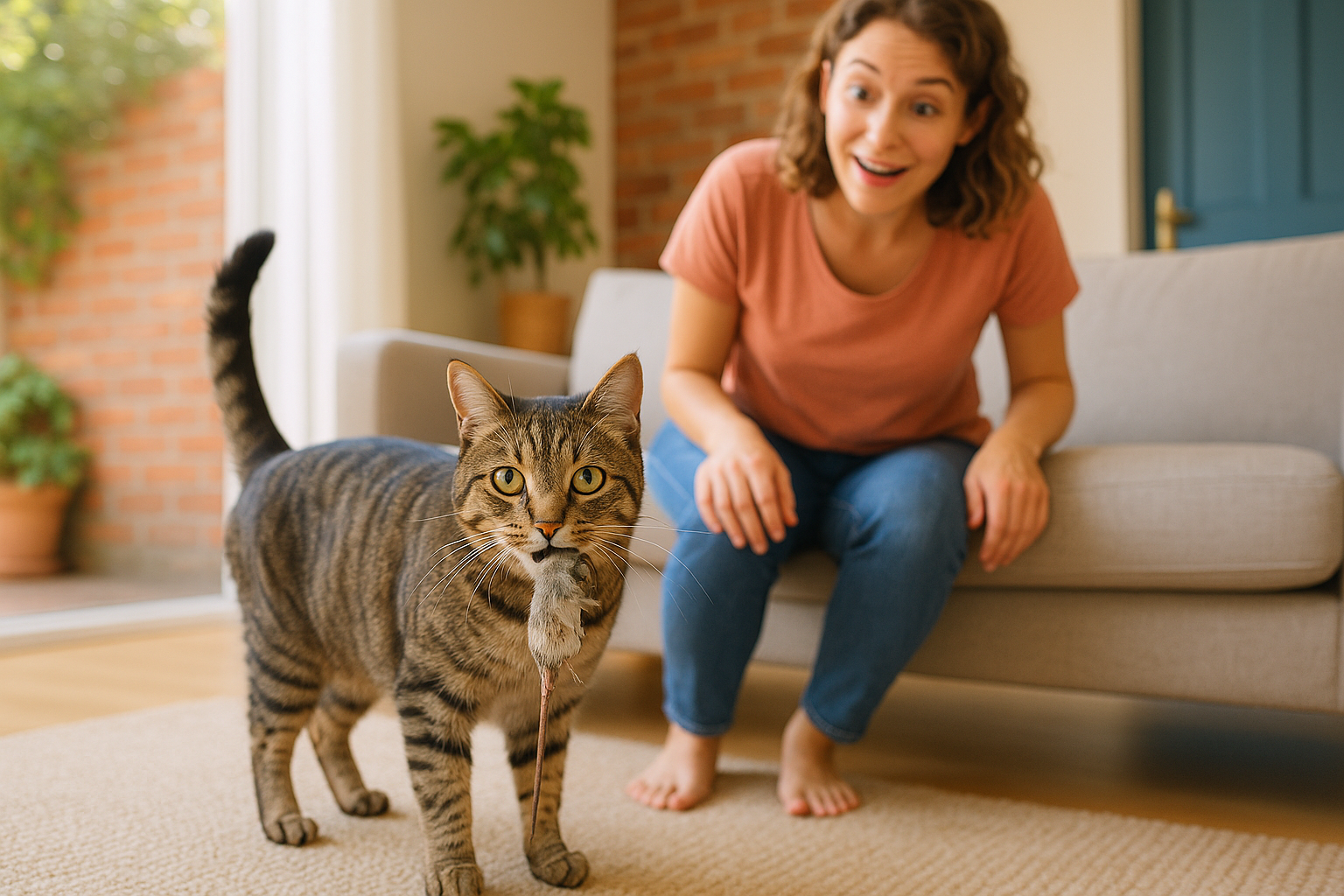
As you sit in your lounge after a long day, you hear the familiar soft thud of something being dropped at your feet. You glance down to find a half-eaten mouse or perhaps a bewildered bird staring up at you, and you can’t help but wonder: why does your cat bring home prey? This unique behaviour can elicit a mix of surprise, amusement, and even frustration, particularly in a South African context where the diversity of wildlife is captivating yet precarious.
The Hunting Instinct in Cats
Cats are natural hunters, a trait ingrained in their DNA. Unlike dogs, whose ancestors were bred for various tasks, cats maintain their hunting prowess as a solitary skill. This instinct does not vanish when your fluffy companion enters your home. Rather, it often manifests in different ways, especially when your cat has outdoor access. South Africa's urban areas, such as Johannesburg or Cape Town, provide ample opportunities for your cat to refine its hunting skills on local wildlife.
When your feline friend trots home with its latest catch, it’s not showing off or simply trying to get your attention. This behaviour can be understood through a cat’s perspective: bringing back prey is an instinctual act stemming from their wild ancestors. Adult cats often hunt to survive, but even domesticated cats engage in this behaviour to satisfy their primal urges. Through hunting, they exhibit their skills and ensure that they can provide for their offspring. When your cat presents you with its catch, it may also be subconsciously inviting you to share in this fundamental ritual — a gift acknowledging your bond as companions.
Understanding the Psychology Behind Prey Bringing
Bringing prey home can seem perplexing through the lens of human emotion, but from a cat's point of view, it carries significant meaning. A cat's hunting behaviour is primarily about survival and training for their young. If your feline is not a mother, it might still be engaging in a form of play or practice, honing its skills for any potential future needs. In essence, your home is a safe space where they feel confident enough to indulge in their instinctual practices.
Additionally, there is a social dynamic to this behaviour; many cats consider their human companions part of their close circle. In the wild, cats may share their kills, possibly as a way to foster relationships and strengthen bonds. By providing you with prey, your cat might unconsciously seek to include you in this vital aspect of its life. In a country that values community, you can see how significant this gesture can be.
Managing Prey Bringing in a Domestic Setting
While it’s essential to acknowledge your cat’s instincts, managing this behaviour is equally important — especially if it involves native wildlife. In South Africa, many birds and small mammals are already under threat due to habitat loss and other environmental factors. Encouraging your cat to focus its hunting instincts away from wildlife will not only help preserve local species but also prevent stress from facing unwanted gifts.
Consider implementing a few strategies:
- Interactive Play: Use toys that mimic prey to fulfill your cat's hunting drive. Feather wands or laser pointers allow your feline to engage in natural hunting behaviours.
- Cat Enclosures: Creating a catio or using an enclosed outdoor space limits their ability to roam freely while providing them with a stimulating environment. This can satisfy their need for exploration without posing risks to local wildlife.
- Outdoor Time Management: If you’re living in an area with abundant local wildlife, consider time limits on outdoor access. Keeping your cat indoors during early morning and dusk — when most small animals are active — can cut down on opportunities for hunting.
Deepening the Bond Through Understanding
Each time your cat drops a mouse or bird at your feet, it’s an opportunity for deeper understanding. Through this behaviour, you can learn to appreciate their instincts and perhaps adopt more mindful management strategies without disrupting the special bond you share. The key is to respect their wild nature while finding creative solutions to meet both their needs and those of the local environment.
By embracing your cat's intrinsic behaviours, you cultivate an environment where both you and your cat thrive together, understanding one another on a fundamental level. Perhaps this week, when your cat brings home its latest ‘trophy’, see it as a chance to connect with its natural instincts and an opportunity to protect the biodiversity that makes our beautiful South Africa unique.
Practical Takeaways
- Engage with your cat through interactive play using toys that mimic prey.
- Consider building or purchasing a cat enclosure for safe outdoor access.
- Limit outdoor access during peak wildlife activity times, like dawn and dusk.









Write Your Opinion!
Log in or Sign up to leave a comment.