
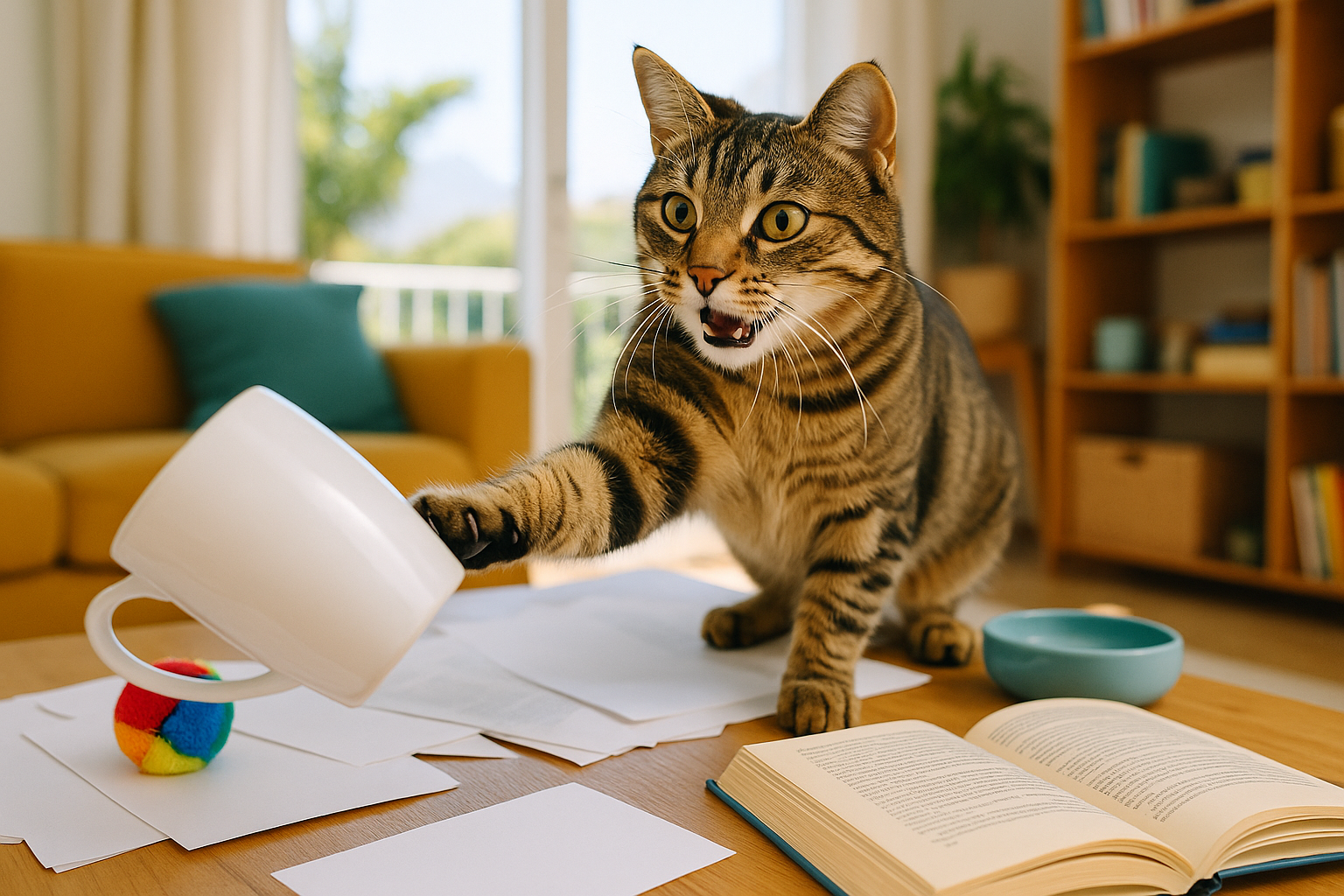
It’s late afternoon in your Cape Town apartment, sunlight pouring through the window just enough to illuminate the delicate stillness of your living room. You’re engrossed in a book — perhaps the latest thriller or a deep dive into South African history — when suddenly, a loud crash shatters your peaceful moment. Whipping your head around, you find your cat, Mr. Whiskers, perched on the edge of the coffee table, looking rather pleased with himself as the remnants of your favourite mug scatter across the floor. You sigh, knowing that this isn’t the first time he’s exhibited such puzzling behaviour. Why, exactly, does my cat enjoy knocking things off the table?
The Curious Instincts of a Feline
To understand this age-old cat behaviour, it’s essential to consider the natural instincts that drive our feline friends. Cats are highly curious creatures, and their keen sense of exploration often leads them to test their environment. When Mr. Whiskers knocks something off the table, he's engaging in behaviour rooted in instinctual curiosity and play. In the wild, cats use their paws to swat at potential prey or inspect items in their surroundings. Similar to their ancestors stalking through the bushveld, this action helps them explore what’s within their reach. Essentially, your tabletop is Mr. Whiskers’ playground, and like any child at play, the urge to push things off is a way of investigating his territory.
Another layer to this behaviour is the inherent desire for attention. Cats, by nature, can be quite independent, but they are also social animals that thrive on interaction. If you respond to this table-top catastrophe — whether with a laugh, frustration, or a simple “no” — it reinforces Mr. Whiskers’ need for social engagement. Even negative attention can be rewarding in the eyes of your feline companion.
Environmental Influences
While some aspects of your cat's behaviour may be instinctual, local environmental factors can also play a role. Living in South Africa, you may notice that certain conditions, such as temperature fluctuations or even changes in household activity, can influence your cat’s mood and behaviour. For example, a cat’s environment is constantly changing; unfamiliar noises or movements might compel Mr. Whiskers to assert control by exploring the heights of your table. This gives him a sense of agency, especially when everything else feels unpredictable.
Additionally, the presence or absence of specific stimuli can impact Mr. Whiskers’ behaviour. A house with minimal interactive toys or vertical spaces may leave him seeking entertainment through chaos. Cats left without enough engagement might resort to knocking things off tables simply out of boredom.
Redirecting the Behaviour
Rather than succumbing to despair as you sweep up broken glass or restored ceramics, consider strategies to redirect your cat’s behaviour. First, provide ample opportunities for exploration and mental stimulation. Introduce new toys, puzzle feeders, or climbing structures to fulfill Mr. Whiskers’ curiosity in a constructive way. You could create an interactive game where he learns to grab or catch toys that you toss gently, keeping him engaged while protecting your table décor.
Secondly, consider creating a designated space for him to engage with his surroundings. For instance, a sturdy cat tree near a window can serve as his lookout point, giving him both a satisfying vantage and a solid place to explore without wreaking havoc on the dining table.
Lastly, consistency is crucial for any behavioural adjustment. Establish a routine for playtime, ensuring that you’re giving Mr. Whiskers attention each day. By making him feel valued and engaged, the frequency of those table-top accidents is likely to decrease.
Practical Takeaways
- Observe if there are specific items Mr. Whiskers prefers to knock off the table and consider removing them.
- Invest in stimulating toys or vertical spaces to keep your cat actively engaged.
- Set aside daily playtime dedicated to interactive games.
- Consider rewarding positive behaviours with treats to foster a connection without inciting the table antics.
- Remember, if your cat exhibits sudden changes in behaviour or shows signs of distress, consult your vet for further insights.
Understanding that knocking things off the table is part of Mr. Whiskers’ natural instincts can help you address the behaviour more effectively. With a little observation and proactive engagement, you can preserve the peace in your home while satisfying your feline companion’s curiosity.









Write Your Opinion!
Log in or Sign up to leave a comment.